

You’ll start the day bright and early, with pickup from your accommodation in Cusco at around 4:00 am. From there, we’ll travel comfortably for approximately two hours to Mollepata, where a delicious buffet breakfast will be waiting for you.
After breakfast, we’ll continue for about another hour to Challacancha 3,800 m (12,467 ft), the starting point of our adventure. Here, we’ll get ready, meet the trekking team, and begin our first hike through the beautiful Andean landscape.
Before setting off, you’ll meet our cooks and horsemen, who will be accompanying and supporting the group throughout the trek. We’ll also take a few moments for a final equipment check before hitting the trail.
From Balcompata, we’ll begin our hike toward the spectacular Humantay Lake (4,200 m / 13,780 ft). The trail starts relatively gently, with mostly flat terrain and a gradual uphill climb through a beautiful glacial valley. Along the way, you’ll follow sections of a restored Inca water channel, which is still used by local farmers today.
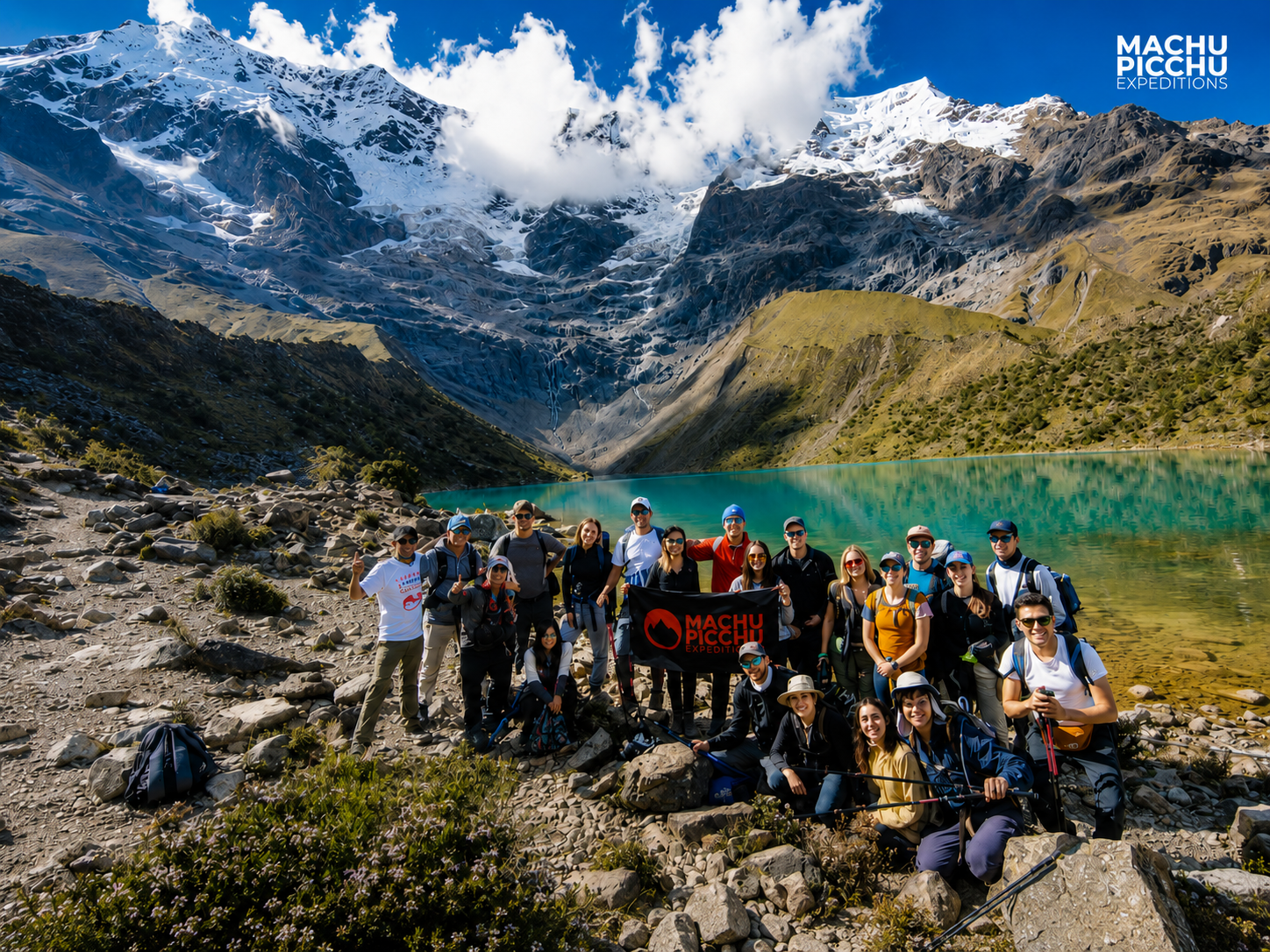
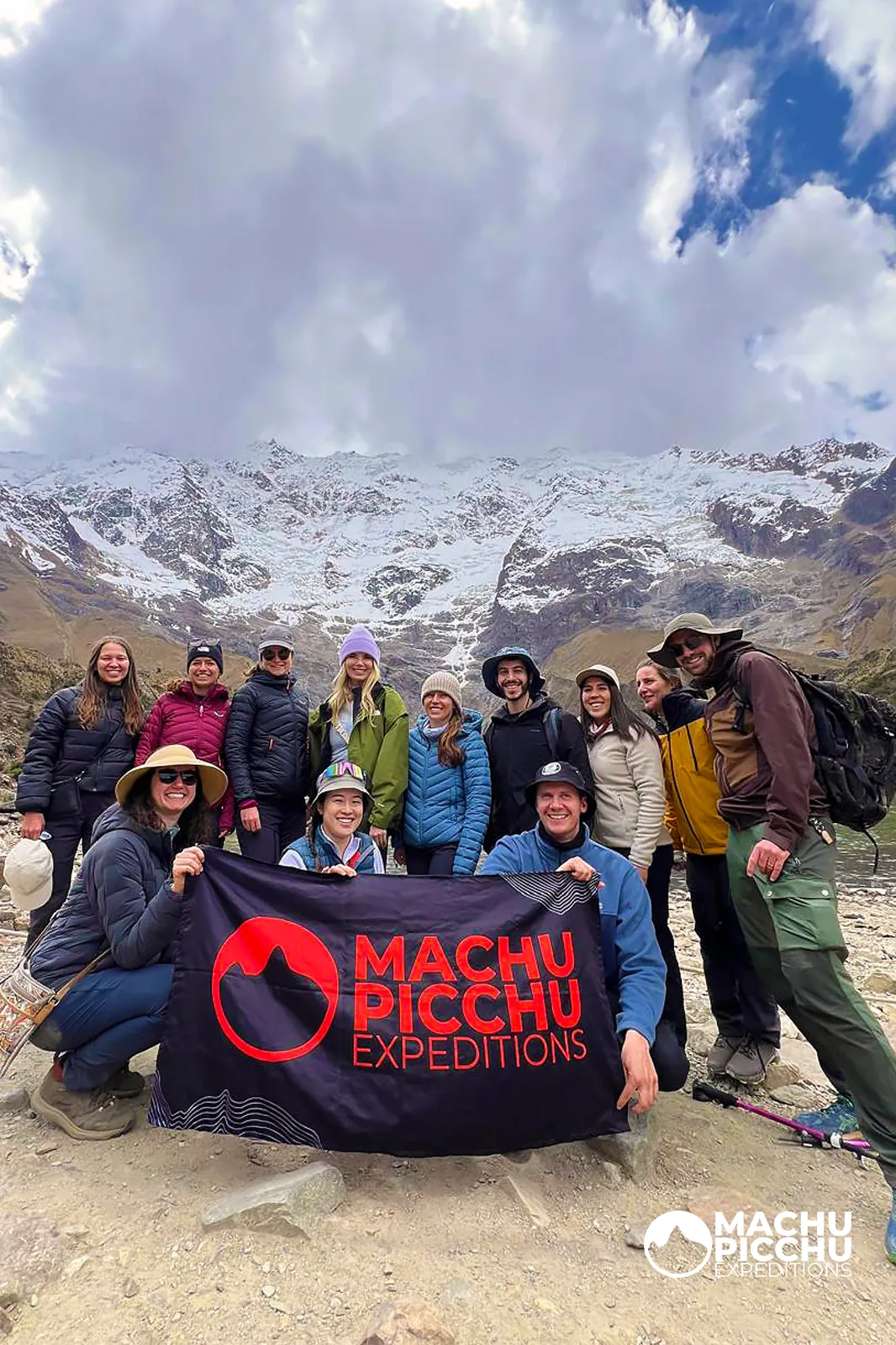
The hike to Humantay Lake is part of a scenic route through the high Andes, and although the distance is manageable, the altitude makes the ascent more demanding. We’ll take our time and hike at a comfortable pace, allowing you to adjust to the elevation and enjoy the surrounding landscape.Once at the lake, you’ll have time to relax and take in one of the most impressive landscapes in the Andes: turquoise waters framed by the towering Humantay Glacier and surrounding mountains. It’s the kind of place that makes you stop, look around, and simply take it all in.
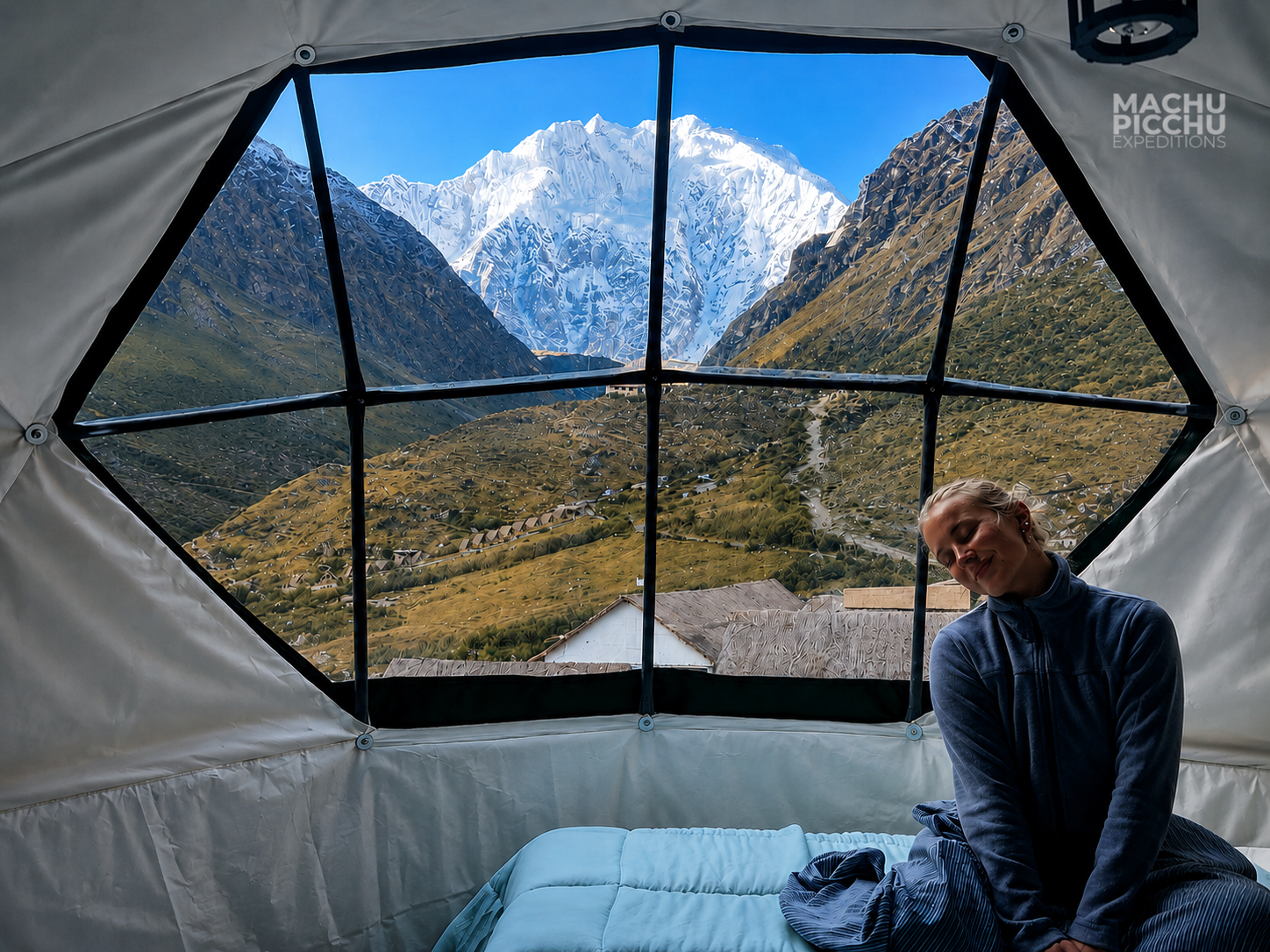
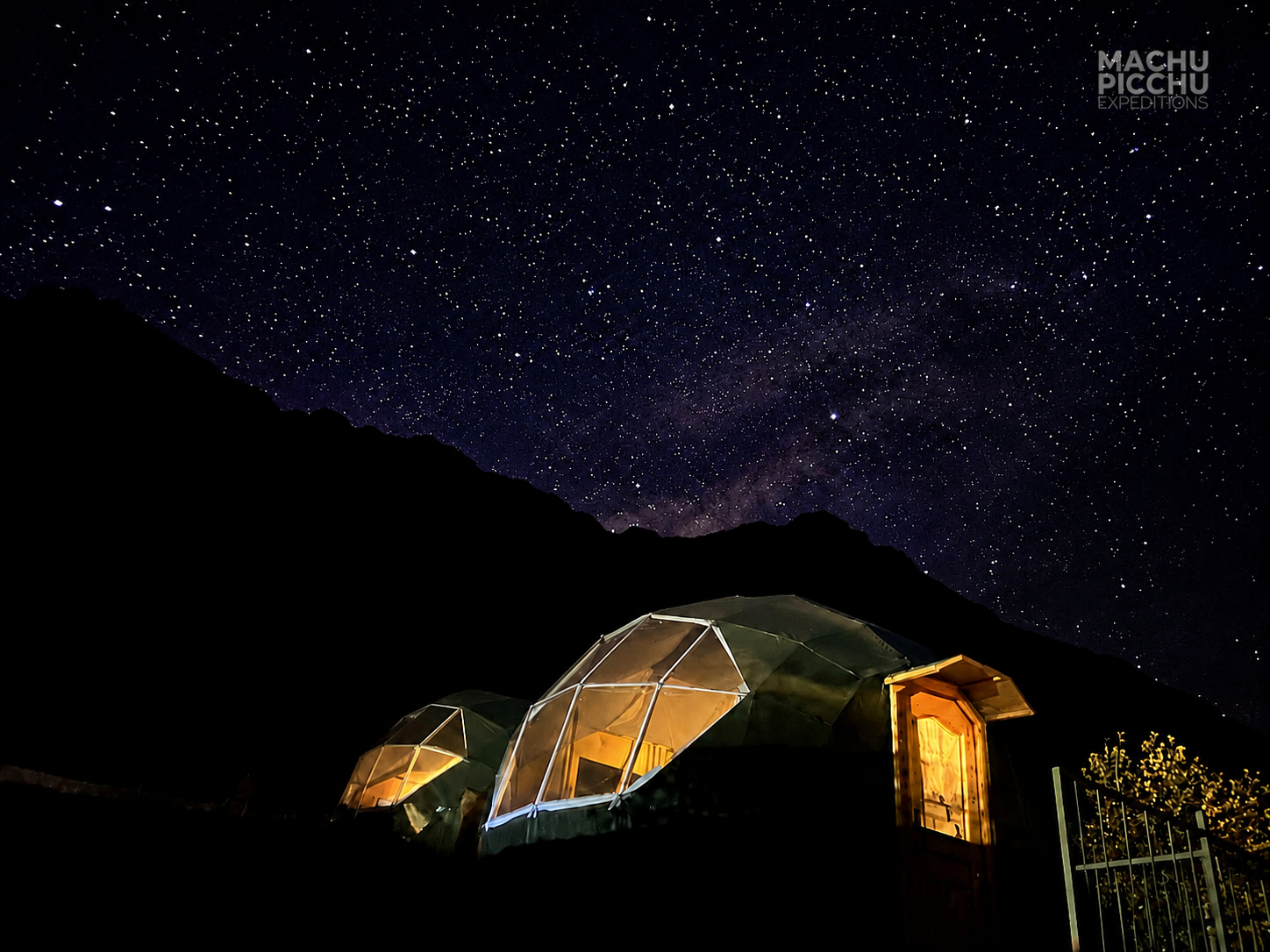
After enjoying Humantay Lake, we’ll continue down toward Soraypampa (3,900 m / 12,796 ft), where we’ll spend our first night. Once at camp, you’ll settle into our Panoramic Sky Domes and have some time to relax after the morning’s hike.
Surrounded by impressive mountain scenery, the domes provide a comfortable place to slow down, recharge, and enjoy the peaceful atmosphere of Soraypampa.
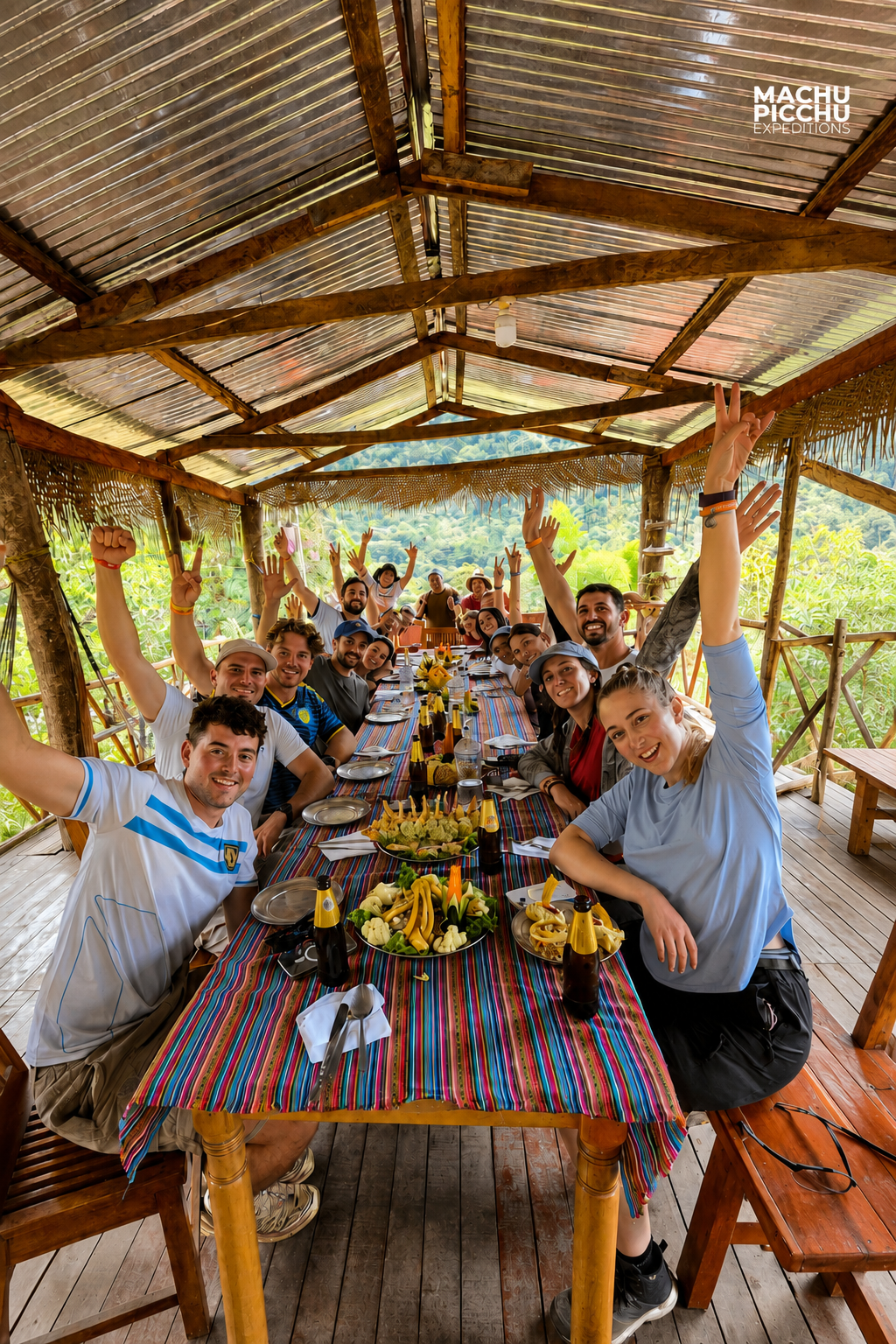
We’ll then enjoy a well-earned lunch in the mountains, followed later in the afternoon by tea time, giving you another chance to unwind, enjoy a warm drink, and take in the incredible surroundings.
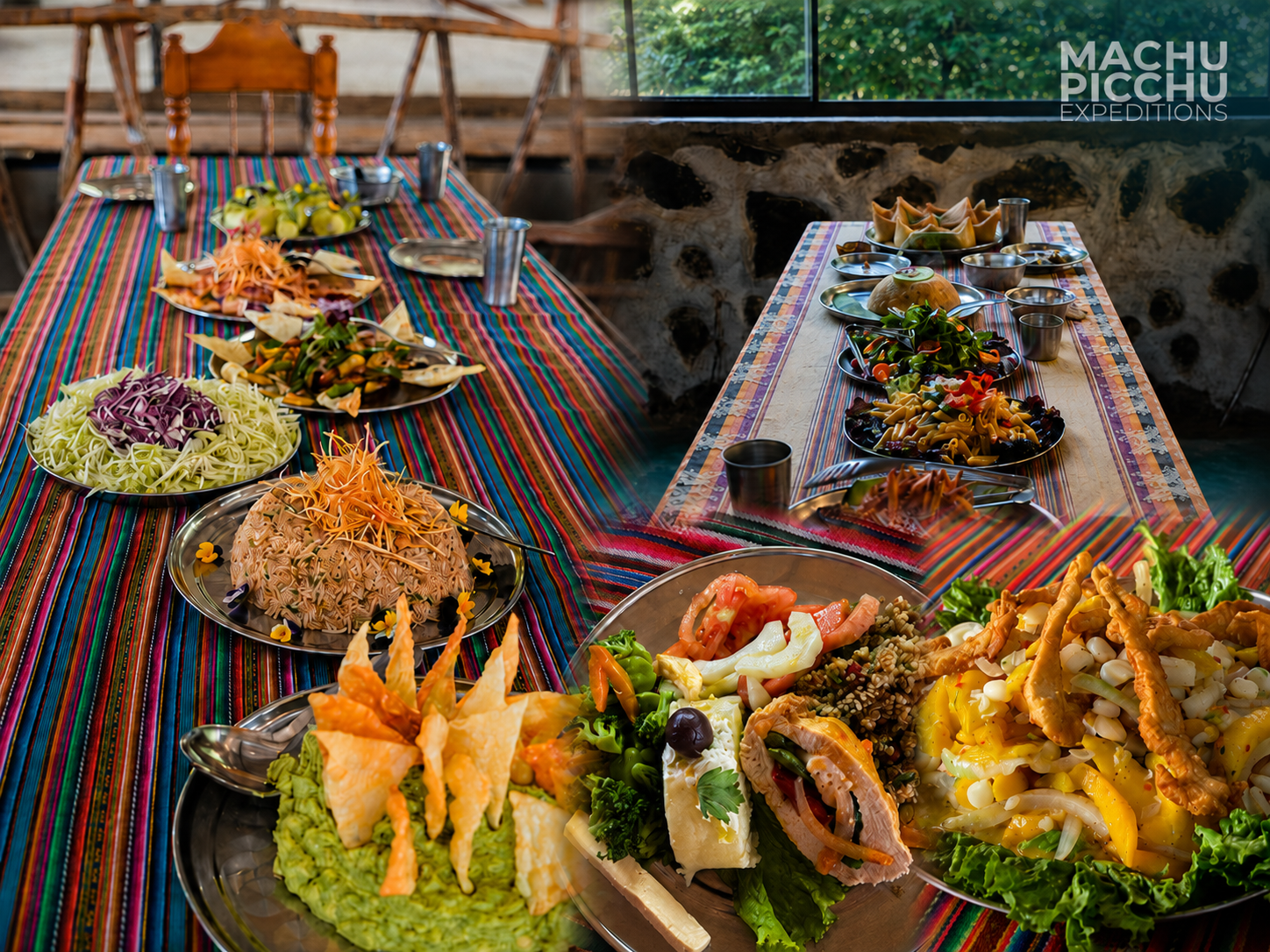
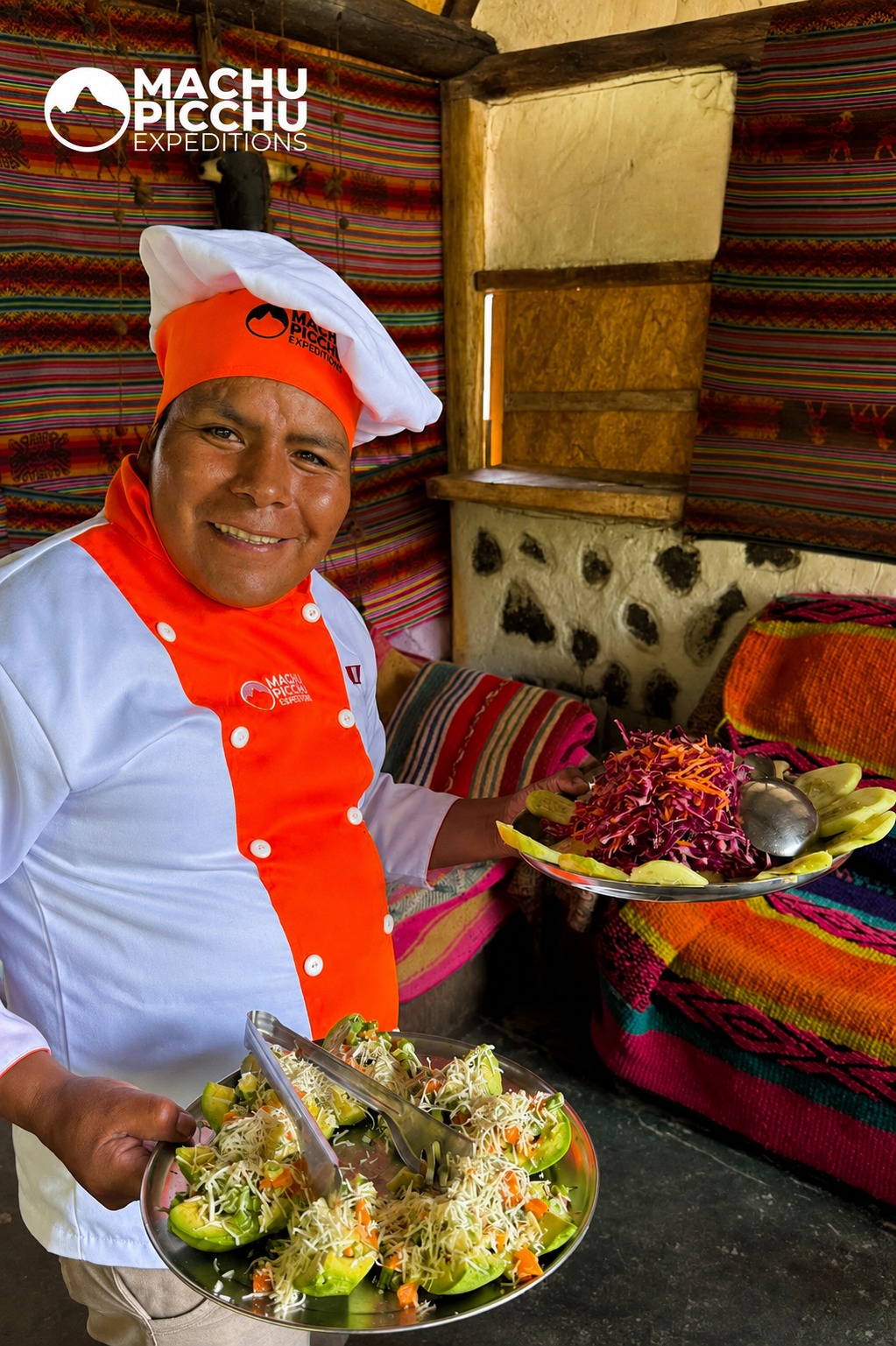
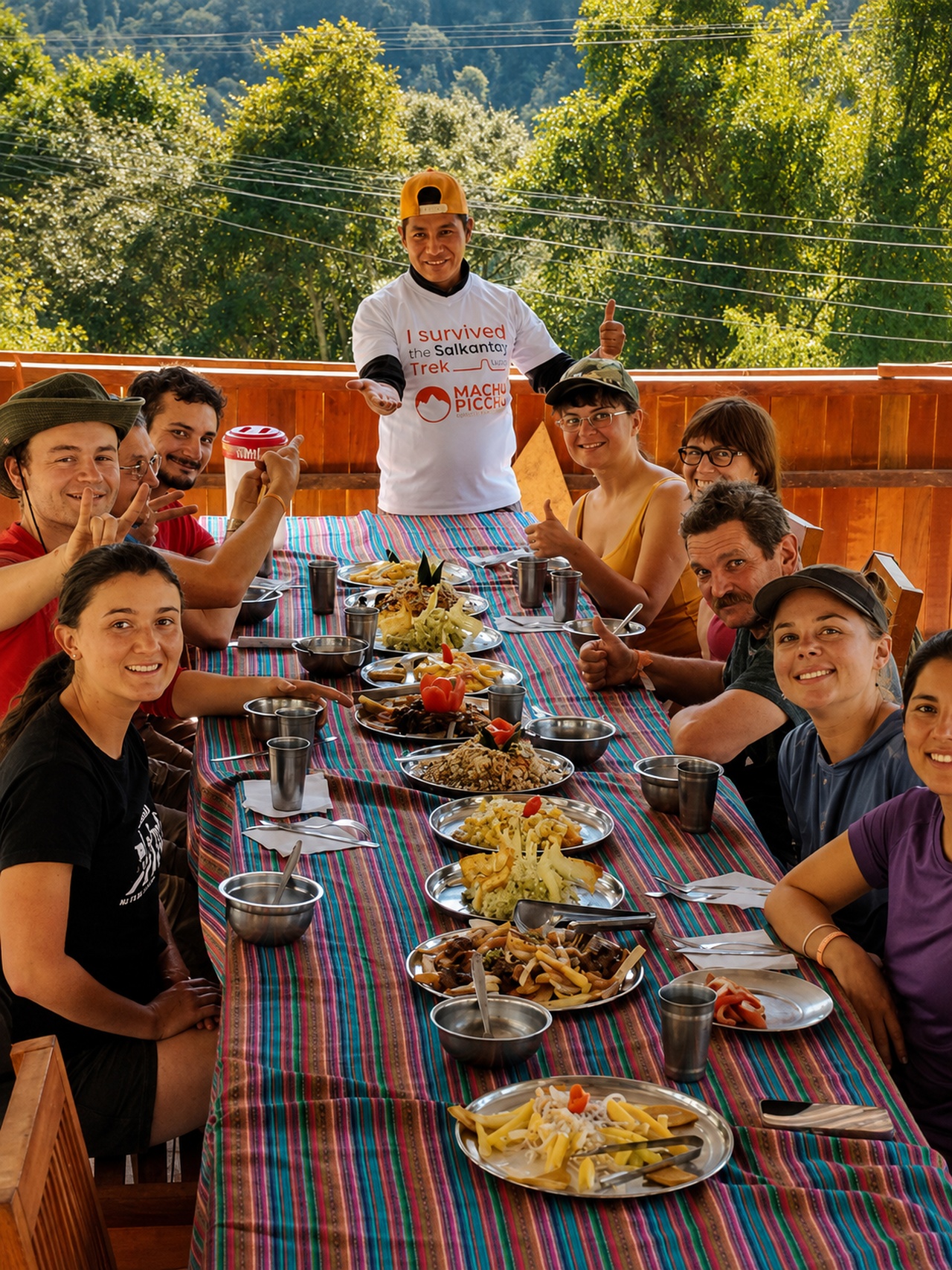
Our meals are freshly prepared by the trekking team, giving you the energy you need while adding another enjoyable part to your experience in the mountains.
As the afternoon comes to an end, you’ll have time to simply relax at camp and enjoy the changing light over the surrounding Andes.
As evening falls, you’ll enjoy a delicious and well-deserved dinner while watching the light fade over the surrounding mountains. Soraypampa has a special sense of calm that is difficult to put into words — it’s something you simply have to experience for yourself.
After dinner, it’ll be time to settle into your Panoramic Sky Dome and get some well-earned rest before the next day’s adventure.
Meals: Breakfast, Lunch, Tea Time, Dinner
Accommodation: Panoramic Sky Domes
Difficulty Level: Moderate
Hiking distance: 10 km (6.21 miles)
Trekking Time: 5 to 6 hours
Campsite Elevation: 4,000 m (13,123 ft) Starting Elevation: 3,800 m (12,467 ft)
Highest Elevation: 4,200 m (13,780 ft)
Weather Forecast: Expect cold and windy nights
You’ll be woken up at the first signs of daylight with an energizing cup of coca tea to get you going. After enjoying a nourishing breakfast, we’ll begin our trek toward the highest point of the entire route: Salkantay Pass, at 4,630 meters (15,190 ft) above sea level.
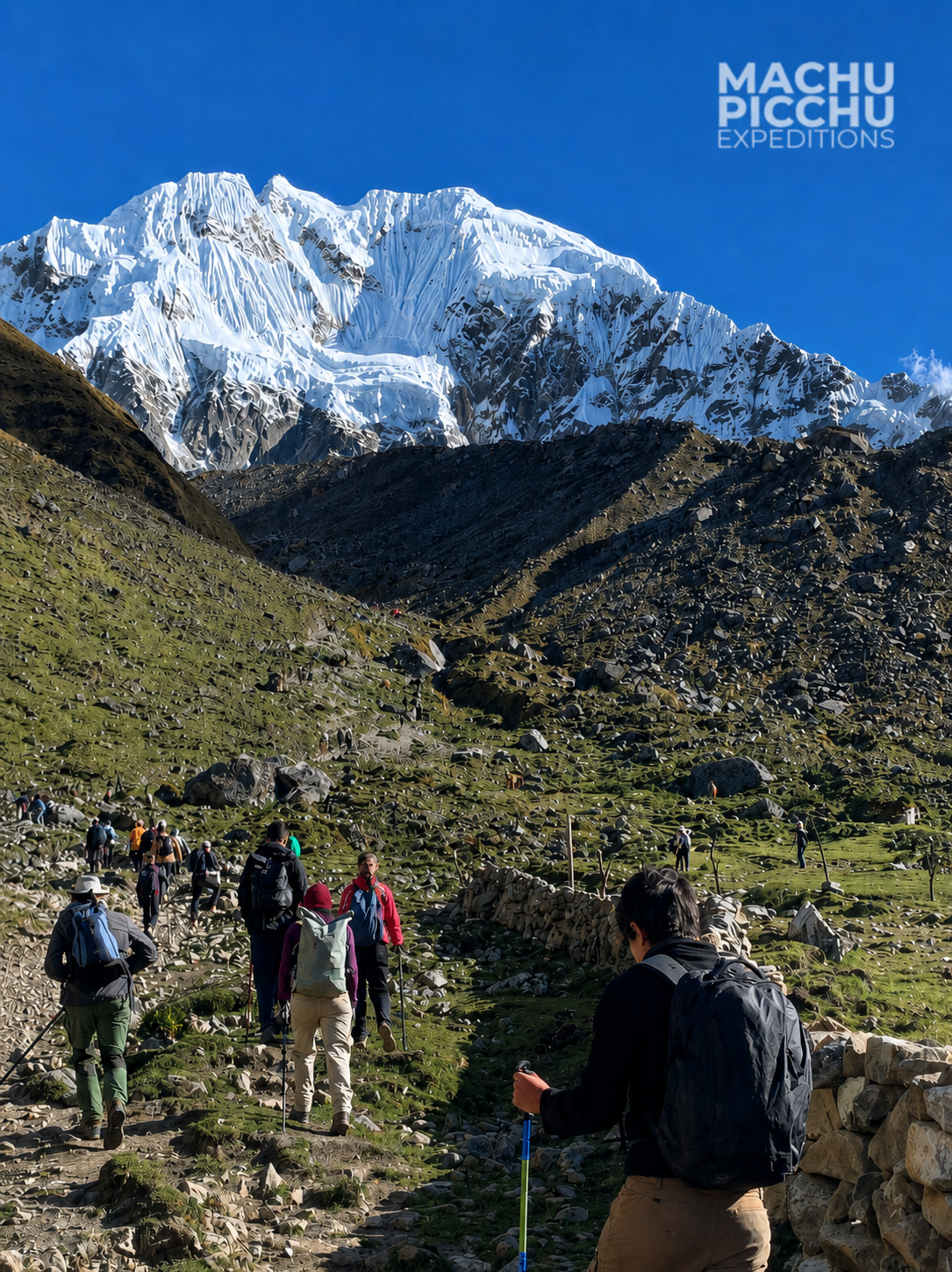
The ascent covers approximately 7 km (4.3 miles) and takes around three hours. It is one of the most challenging sections of the trek, as we gradually make our way higher into the dramatic Andean landscape.
One of the most memorable sections is the famous “Trail of the 7 Snakes,” named after the series of winding switchbacks that climb steadily toward the pass.
As you continue climbing, the surroundings become increasingly rugged and spectacular, with sweeping views of the high Andes accompanying you toward the top.
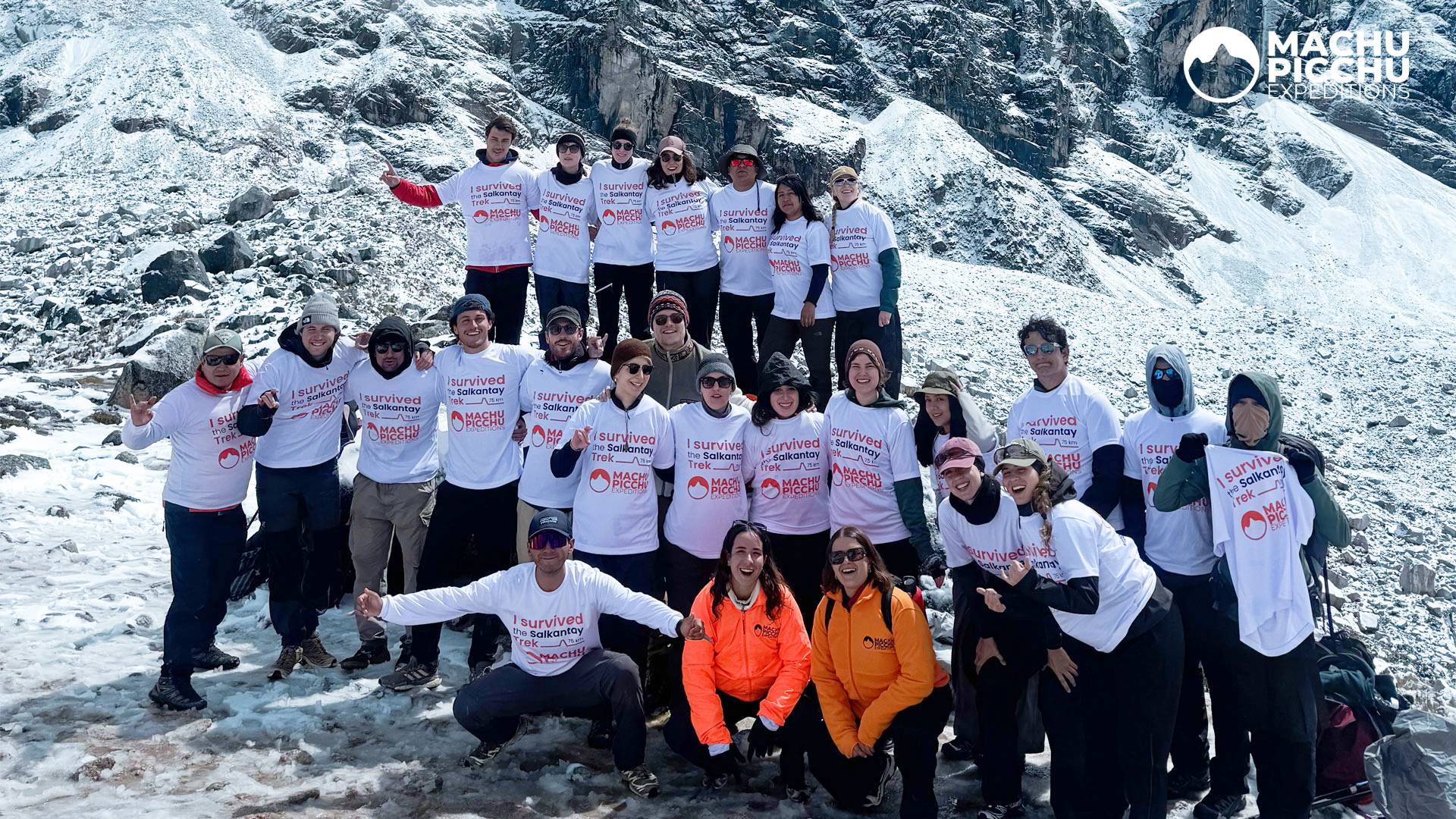
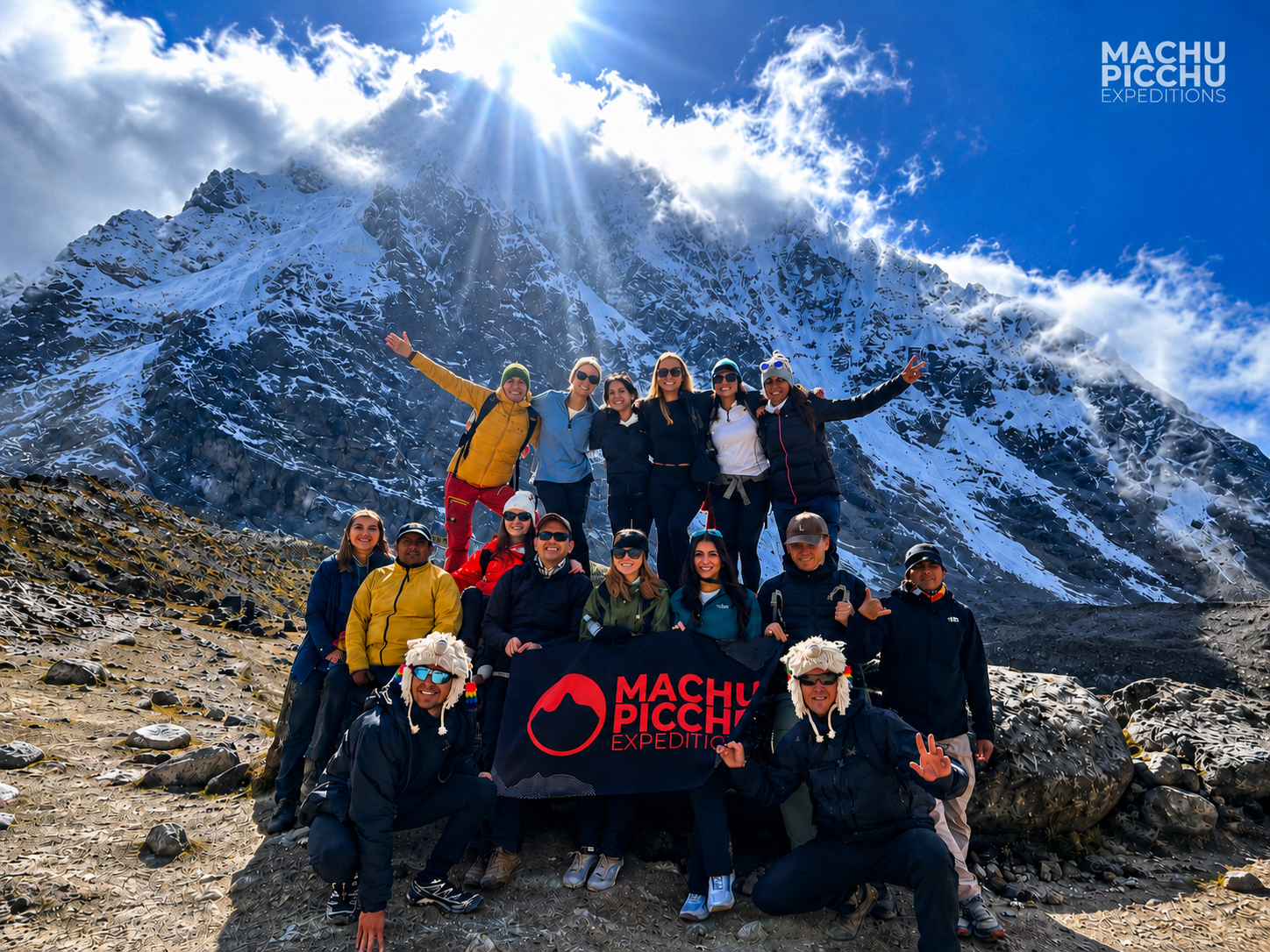
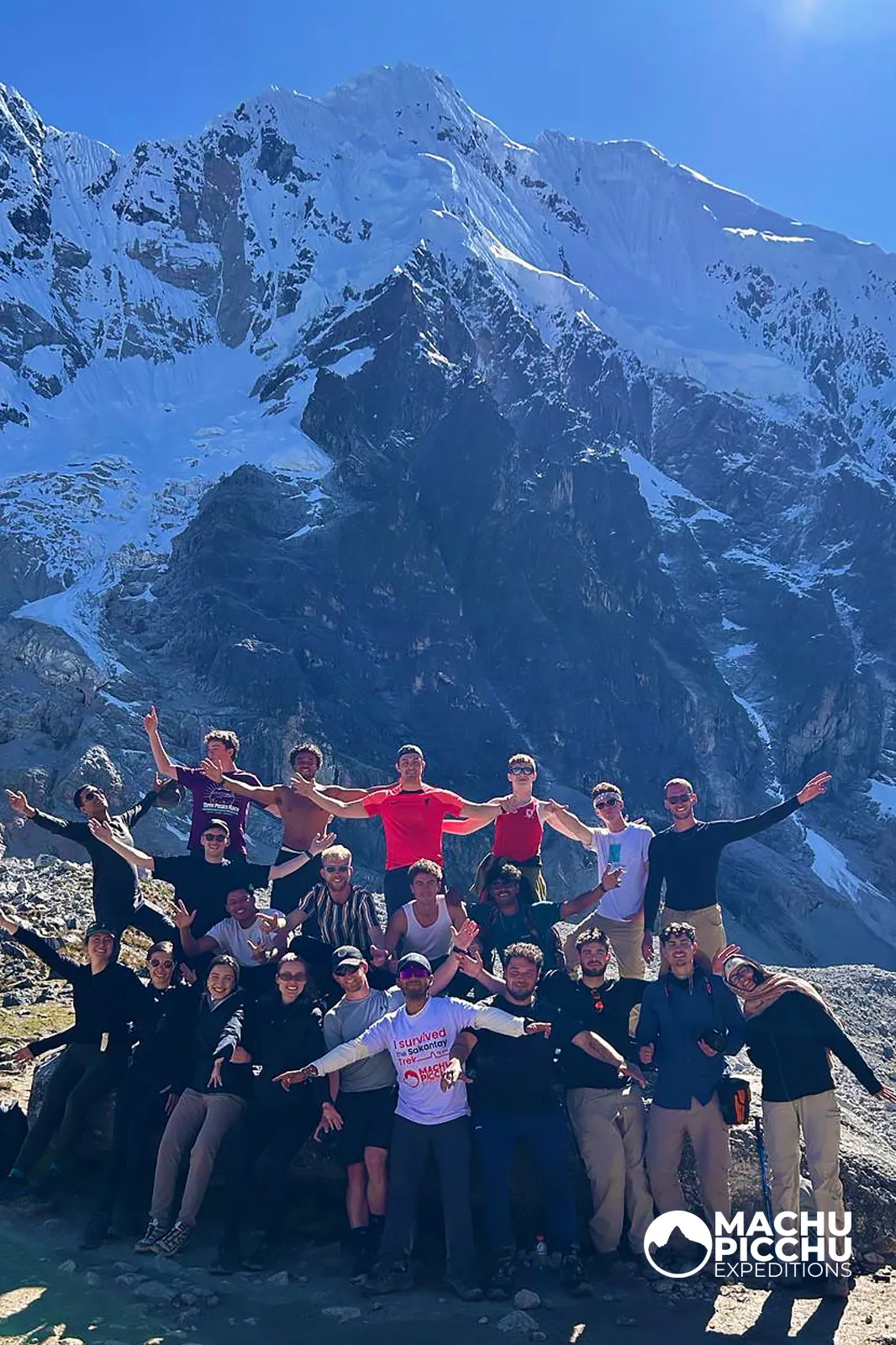
Once you reach the pass, the effort is rewarded with spectacular panoramic views of the surrounding valleys and the imposing Salkantay Mountain (6,271 m / 20,574 ft) rising beside you. Salkantay is one of the most important sacred mountains, or Apus, of the region.
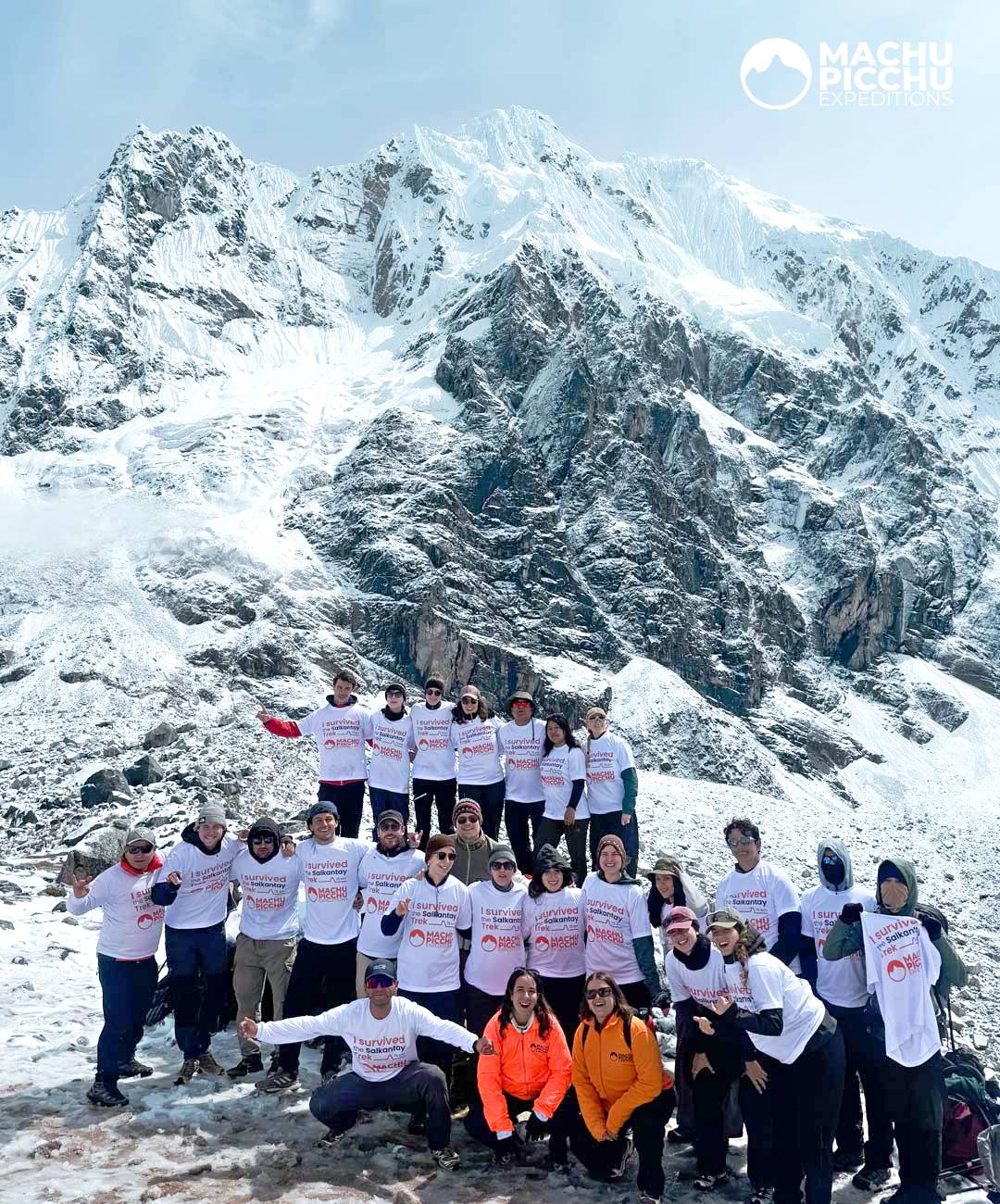
From the pass, you can also admire Humantay, Tucarhuay, and Pumasillo, creating one of the most impressive mountain panoramas of the entire trek. We’ll spend some time here resting, taking photos, and enjoying this unforgettable high-altitude setting.
Afterward, we’ll begin an approximately two-hour descent to Wayraqmachay (3,850 m / 12,631 ft), where our trekking team will be waiting with a freshly prepared lunch.
The trail on this section is rocky and gravelly, with impressive views stretching down into the valley below. As you descend, you’ll gradually notice the landscape beginning to transform around you.
After a well-earned lunch, we’ll continue for approximately 8 km (5 miles) over around three hours, leaving the high Andean environment behind and entering the lush Andean cloud forest.
This is one of the most fascinating transitions of the Salkantay Trek. In just a few hours, the scenery changes dramatically from rugged mountains and glaciers to greener valleys, waterfalls, native vegetation, and a noticeably warmer climate.
Along the way, you’ll walk through increasingly tropical surroundings and experience firsthand the transition between the Andes and the upper Amazon basin. Keep an eye out for native plants, colorful vegetation, and the changing wildlife as we descend deeper into the valley.
We’ll eventually reach Chaullay, where we’ll take a short 20-minute rest before continuing the final stretch of the day.
From Chaullay, it is approximately another 30-minute walk to Collpapampa, where our campsite is located.
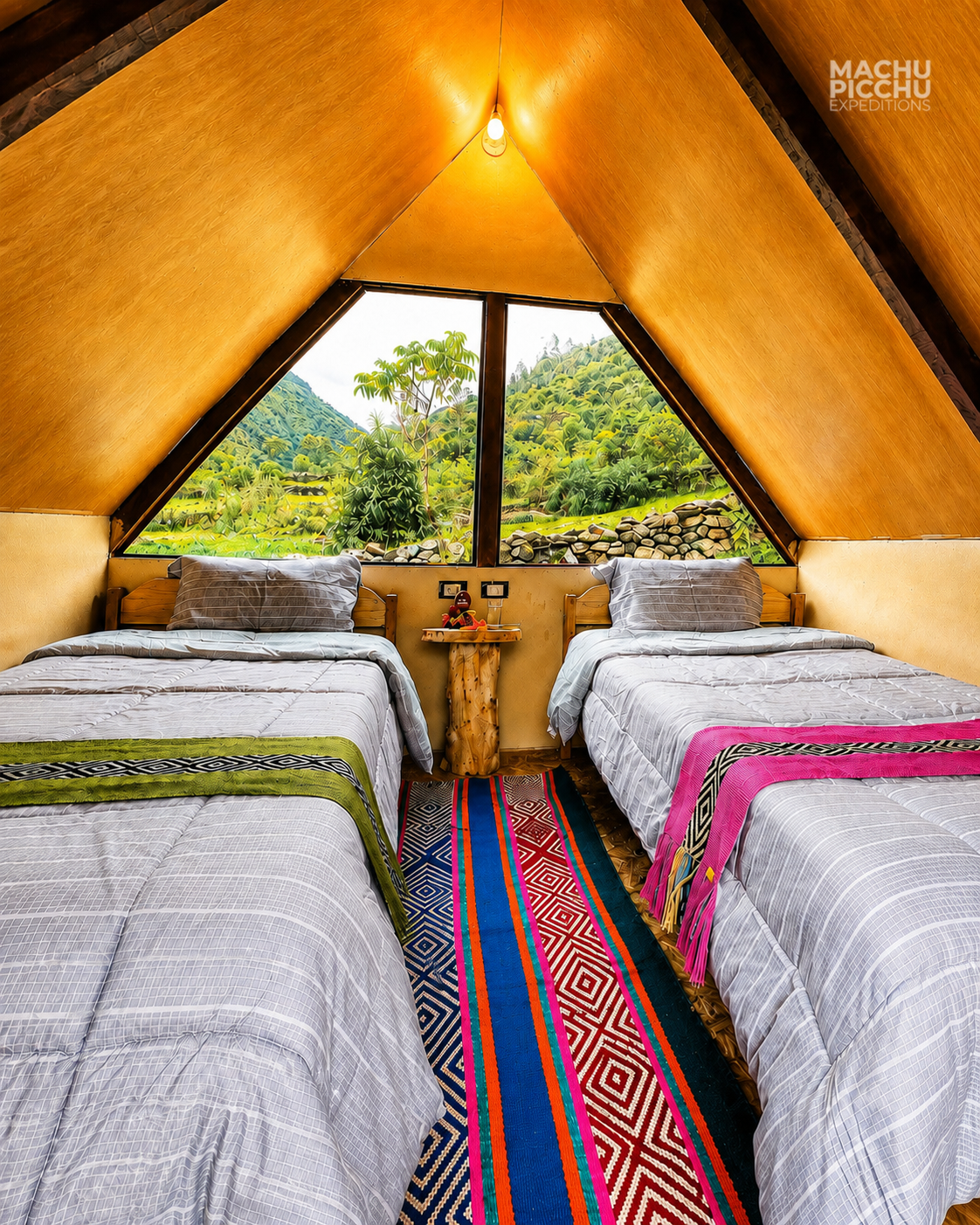
After completing the longest and most demanding day of the trek, you’ll be welcomed with a hearty dinner before settling into our Sky Huts Camp for a peaceful and well-deserved night’s rest surrounded by the mountains and vegetation of Collpapampa.
You’ve conquered Salkantay Pass — tonight, you’ve definitely earned a good night’s sleep.
Meals: Breakfast, Lunch, Tea Time, Dinner
Accommodation: Sky Huts
Difficulty Level: Challenging
Hiking distance: 22 km (14 miles)
Trekking Time: 9 to 10 hours
Campsite Elevation: 2,950 m (9,678 ft)
Starting Elevation: 4,000 m (13,123 ft)
Highest Elevation: 4,630 m (15,190 ft)
Weather Forecast: Cold at the pass, becoming warmer and more humid during the descent
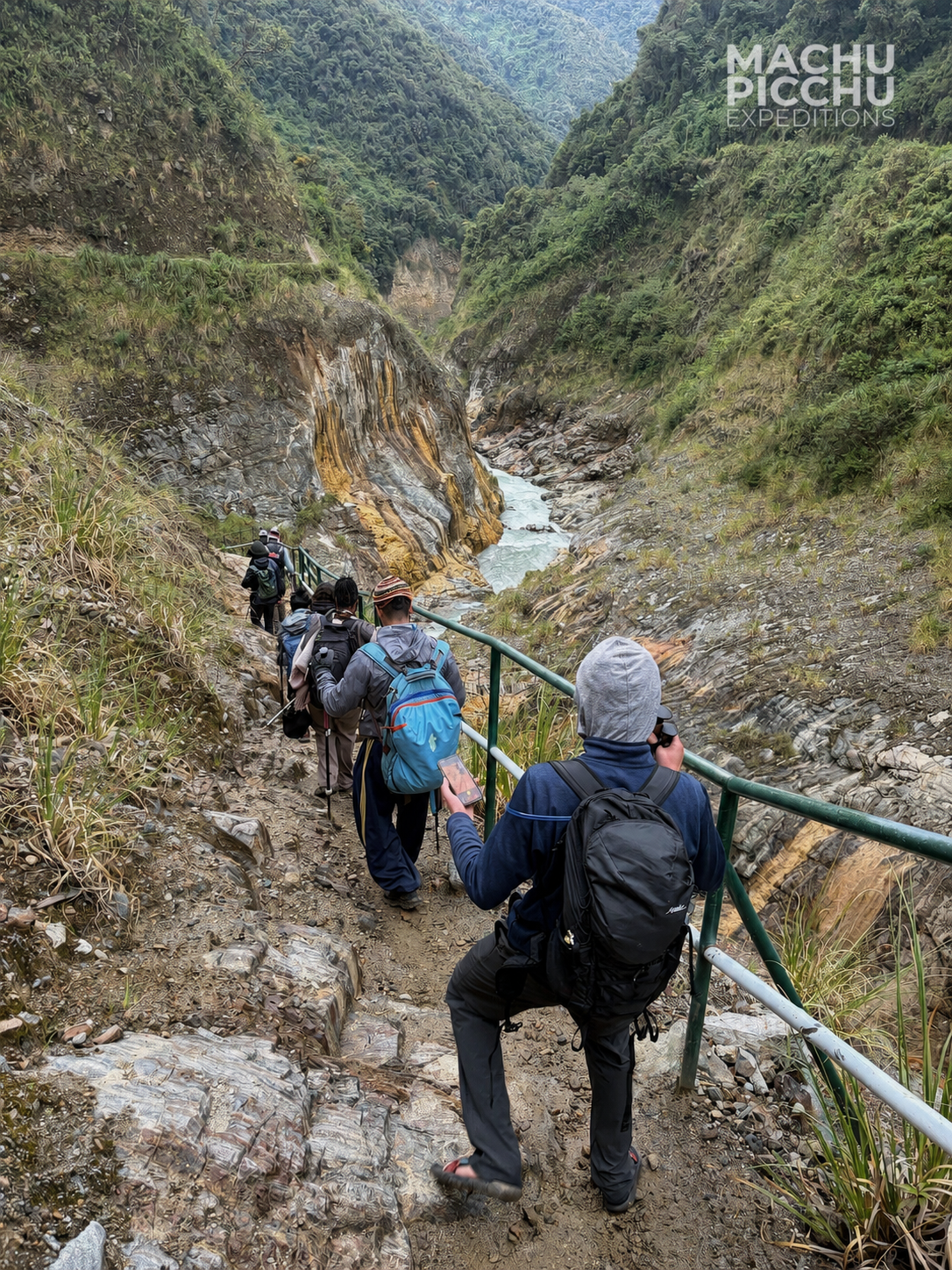
Today, you’ll wake up at around 6:00 a.m. to a warm cup of coca tea, followed by a hearty breakfast at the campsite. Once ready, we’ll leave Collpapampa behind and begin our trek toward La Playa Sahuayaco, in the Santa Teresa Valley.
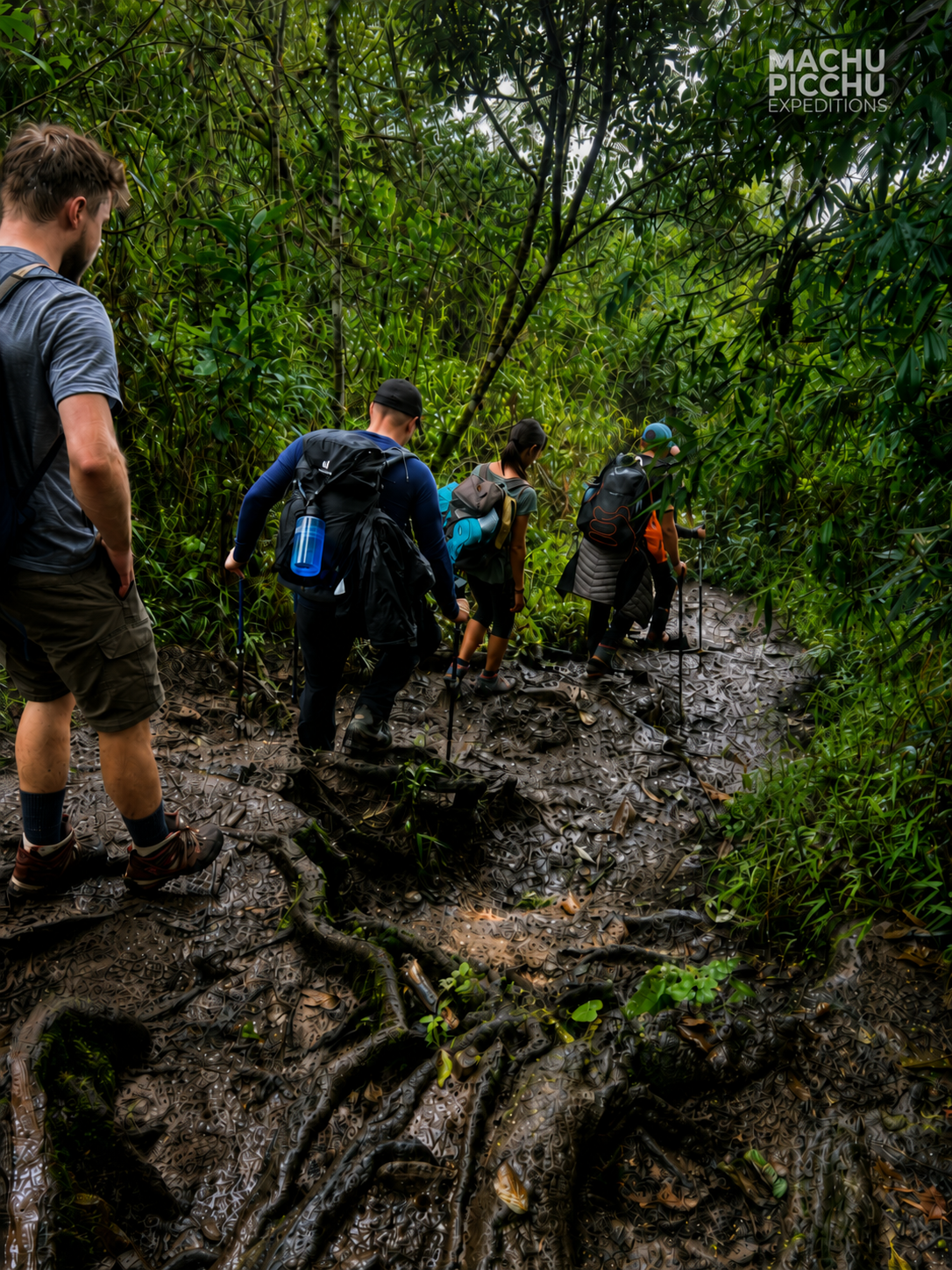
Today’s hike is more relaxed than the previous day, with more downhill sections than climbs, giving you plenty of time to enjoy the dramatic change in scenery as we descend into the lush cloud forest.
Along the way, we’ll follow rivers and waterfalls and walk through a vibrant landscape filled with orchids, tropical vegetation, and plantations of coffee, bananas, avocados, and other local crops.
This part of the Salkantay Trek offers a completely different atmosphere from the high mountains of the previous days, as the cold Andean scenery gradually gives way to the warmer, greener landscapes of Santa Teresa.
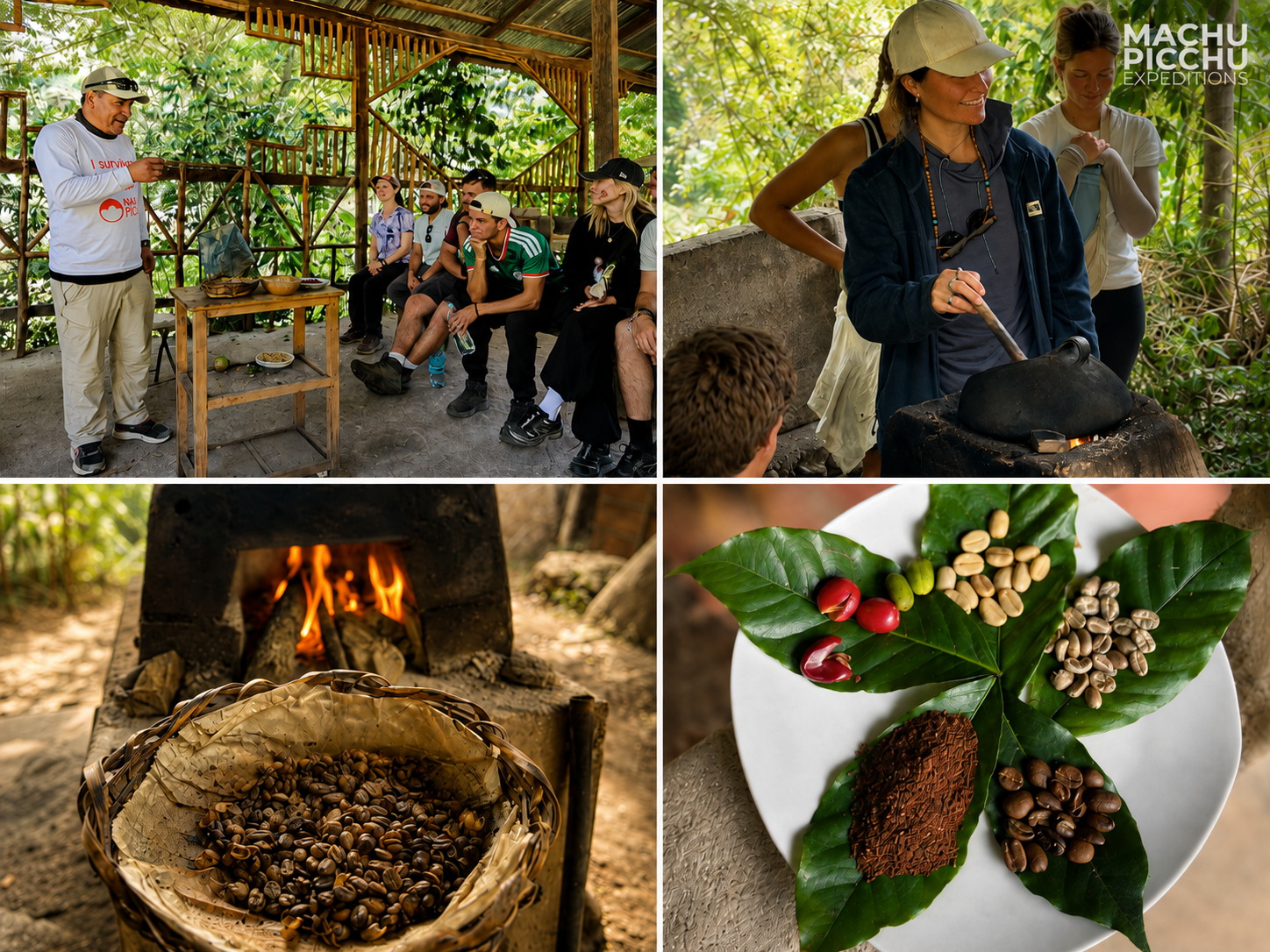
In La Playa (2,060 m / 6,759 ft), we’ll take part in a traditional Coffee Class hosted by a local family. They’ll guide you through the entire coffee-making process, from growing and harvesting the beans to roasting and preparing them.
As this region is well known for its locally grown coffee, you’ll have the opportunity to learn directly from the people who produce it and discover how coffee is traditionally prepared in the area. To finish the experience, you’ll prepare and taste your own cup of freshly brewed local coffee — a simple but memorable way to connect with the culture and daily life of the Santa Teresa Valley.
After the Coffee Class, we’ll continue to Lucmabamba, where Once we arrive, we’ll enjoy a delicious lunch at the campsite. After enjoying lunch and some time to relax at our Lucmabamba camp, we’ll say goodbye to those continuing on our 5-day Salkantay adventure. Our private transport will then take us to Hidroelectrica, where we’ll begin the final stretch of our journey toward Aguas Calientes, the gateway to Machu Picchu.
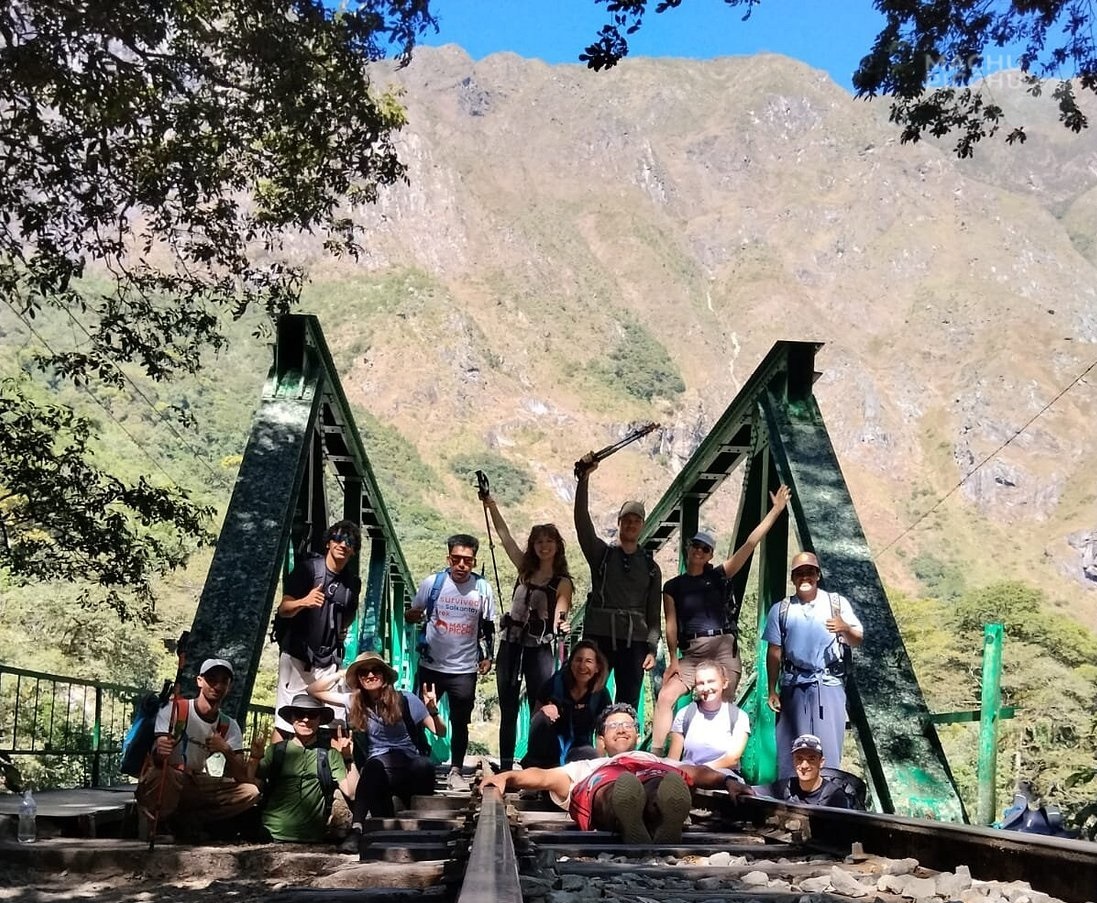
Then, we’ll follow the trail alongside the railway tracks toward Aguas Calientes, surrounded by lush vegetation and accompanied by the Urubamba River. If you feel too tired to continue walking, you’ll also have the option to take the train from Hidroelectrica to Aguas Calientes for an additional cost (approximately US$34, not included).
As we walk through this tropical landscape, we’ll pass avocado, banana, and coffee plantations while keeping an eye out for the many bird species that inhabit the area, including the colorful Andean cock-of-the-rock, Peru’s national bird.
After approximately 2 to 3 hours of mostly flat walking, we’ll arrive in Aguas Calientes, the town located at the foot of Machu Picchu.
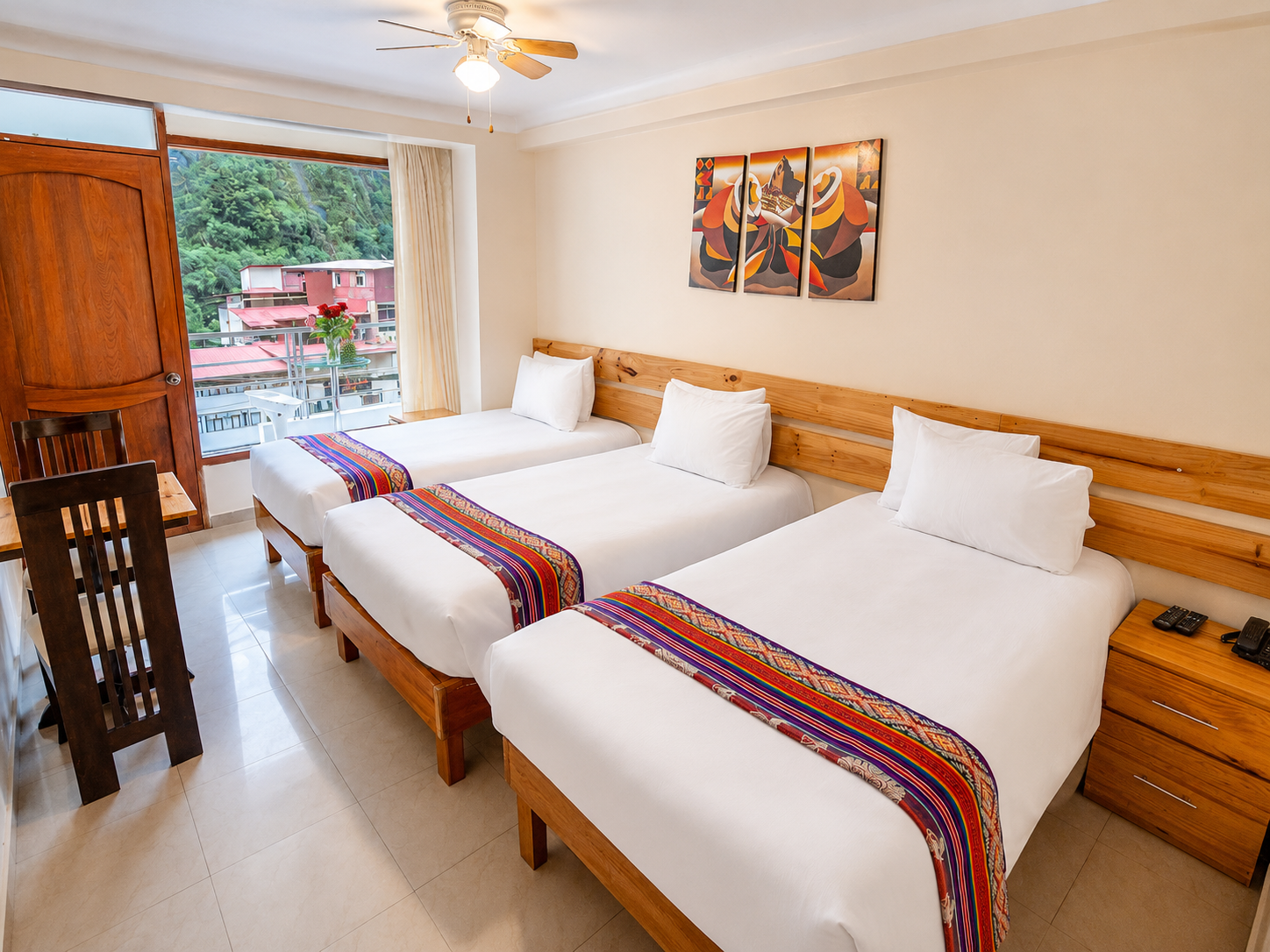
Once there, we’ll head to our hotel, where your room includes a private bathroom, hot shower, Wi-Fi, breakfast the following morning, and luggage storage while you visit Machu Picchu.
You’ll have some free time to shower, relax, or explore the pedestrian streets of Aguas Calientes before dinner. With no regular road traffic and mountains rising dramatically around the town, it has a unique atmosphere unlike anywhere else in Peru.
At 7:00 pm, we’ll meet for dinner at Chef House Restaurant. During dinner, your guide will go over the final details for the following morning and help you prepare for the highlight of our adventure:
Machu Picchu!
Meals: Breakfast, Lunch, Dinner
Accommodation: 3 Star Hotel Stay in Aguas Calientes
Difficulty Level: Difficult
Hiking distance: 24 km (15 miles)
Trekking Time: 8 to 9 hours
Campsite Elevation: 2,040 m (6,693 ft)
Starting Elevation: 2,000 m (6,562 ft)
Highest Elevation: 2,800 m (9,186 ft)
Weather Forecast: Hot
Today is the day you’ve been waiting for since you took your very first step on the Salkantay Trail.
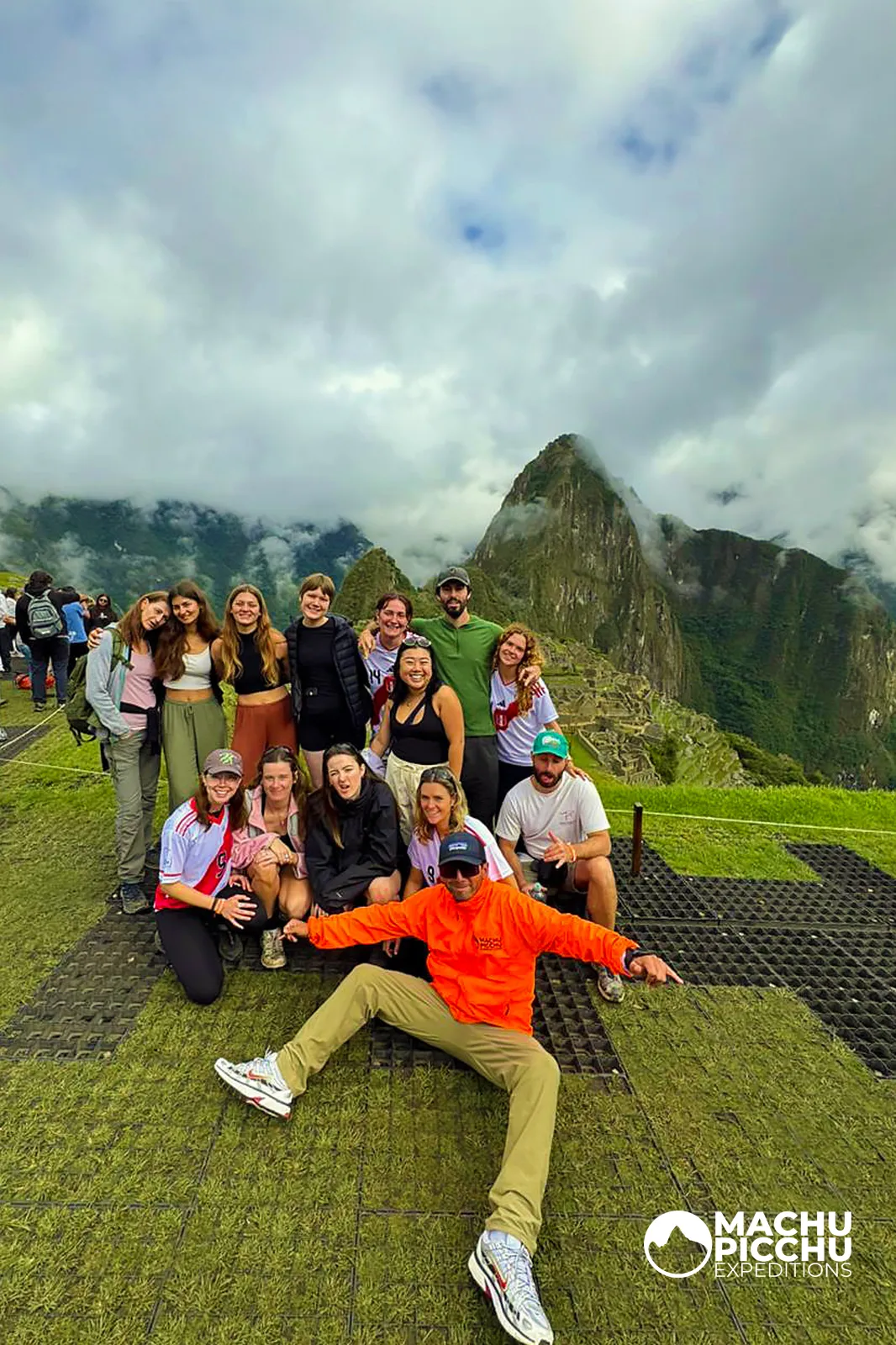
After days of crossing towering mountains, cloud forests, remote valleys, and unforgettable landscapes, the journey reaches its ultimate reward: Machu Picchu.
This morning, you’ll finally step inside one of the New Seven Wonders of the World and a UNESCO World Heritage Site — a place whose history, beauty, and extraordinary setting have fascinated travelers from around the world for generations.
Welcome to Machu Picchu — the unforgettable finale to your Salkantay adventure.
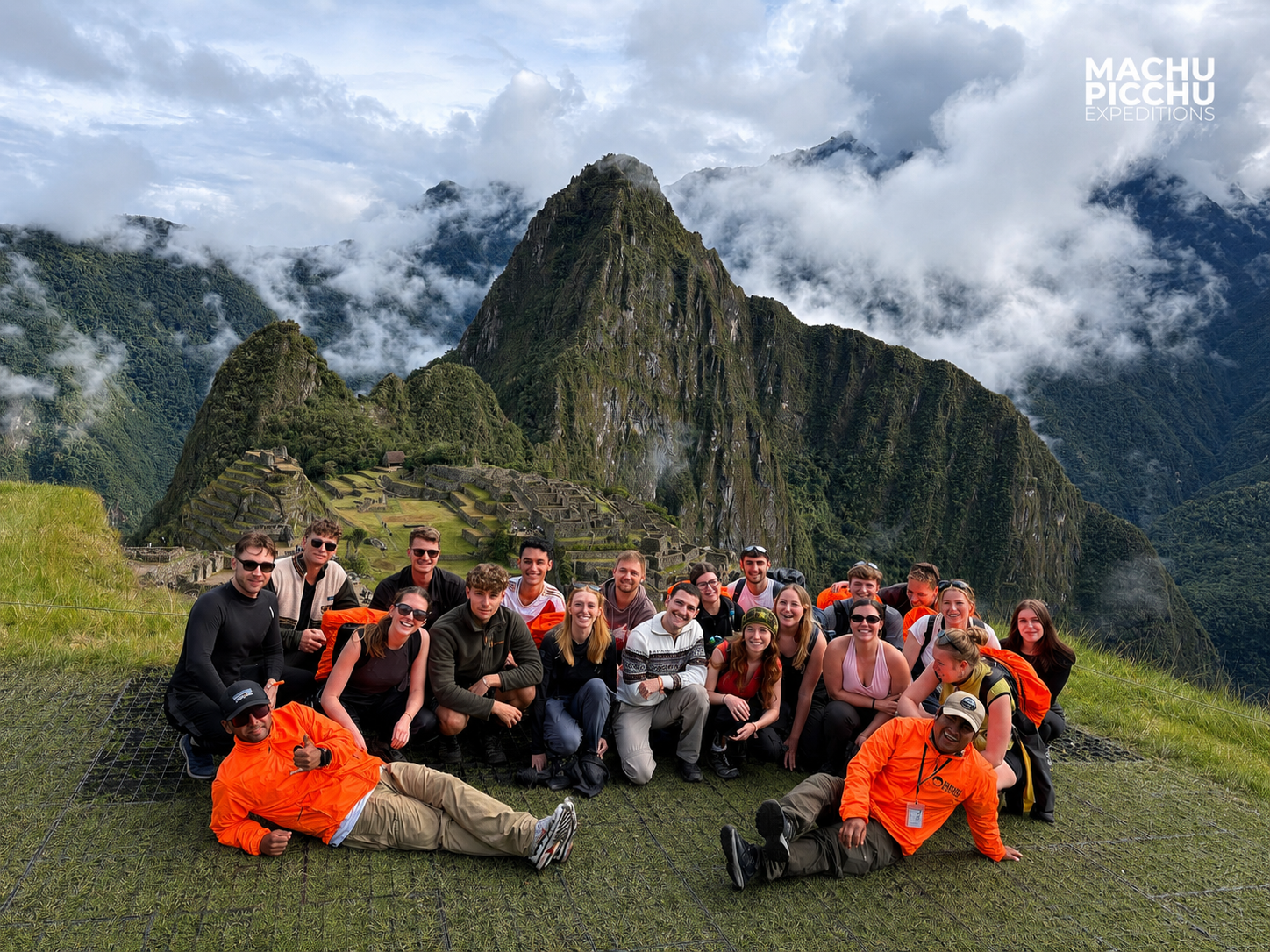
You’ll wake up early this morning to make the most of your visit to Machu Picchu, when the surrounding mountains and the soft morning light create an unforgettable atmosphere.
After making our way to the Inca citadel, you’ll begin a guided tour of approximately 1.5 hours, exploring some of the most fascinating areas of this extraordinary archaeological sanctuary.
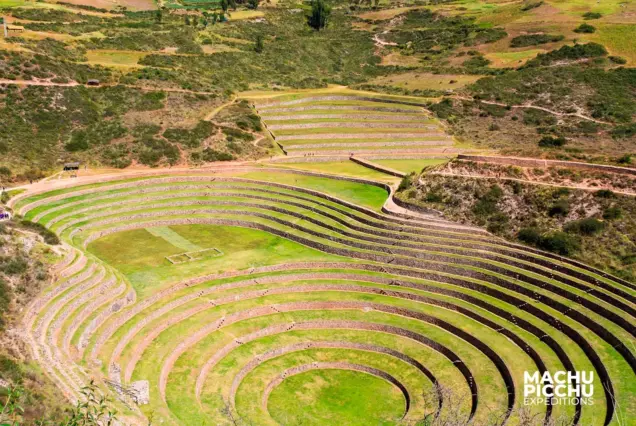
Along the way, your guide will bring Machu Picchu to life as you discover its temples, agricultural terraces, ceremonial areas, residences, and remarkable stone structures while learning about the history, beliefs, and daily life of the Inca civilization.
What makes Machu Picchu even more impressive is its extraordinary engineering. Built high in the Andes without modern machinery, the Incas created an incredibly sophisticated city with precisely cut stonework, agricultural terraces, drainage systems, fountains, and water channels that have survived for centuries.
As you walk through the citadel, you’ll begin to understand why Machu Picchu remains one of the world’s greatest archaeological wonders — not only because of its history, but also because of the extraordinary harmony between its architecture and the surrounding mountains.
After completing your guided visit, you’ll have time to take in those final views and capture the photographs you’ve been dreaming about since the beginning of your Salkantay adventure.
For travelers who have booked an additional entrance in advance, there may also be the opportunity to hike Huayna Picchu or Machu Picchu Mountain, offering spectacular panoramic views over the citadel and the surrounding Andes.
After days of trekking across mountains, valleys, cloud forests, and ancient Inca trails, this is the moment everything has been leading toward:
standing in front of Machu Picchu and realizing you made it.
After visiting Machu Picchu, your return to Cusco will depend on the option you choose. You can travel back with us by train, or arrange your own return (by train or bus) with our guidance..
🚆 Return by Train (Recommended)
The most comfortable and fastest way to return to Cusco.
🚌 Return by Bus (Budget Option)
We do not directly operate this service, but we will guide you on how to arrange it.
Total travel time: 7 to 8 hours
Route details:
If no suitable ticket is available online: you may need to purchase your entrance ticket directly in Aguas Calientes at the Ministry of Culture office, subject to the official ticketing procedures and availability at that time. Tickets purchased in Aguas Calientes are usually issued for a visit on the following day or, depending on availability, for one of the subsequent days. The exact entrance date, time and circuit will depend on the tickets available at the time of purchase.
Ticket payment: If your booking was fully paid and you need to purchase the ticket directly, Machu Picchu Expeditions will refund the corresponding ticket amount of S/.152 or USD 45. If your reservation was made with a deposit, S/.152 or USD 45 will be deducted from your remaining balance, so you can use that amount to purchase your entrance ticket.
Important: Machu Picchu entrance tickets, circuits, entrance times and availability are controlled by the Peruvian Ministry of Culture. If you need to purchase your ticket in Aguas Calientes, your Machu Picchu visit date, entrance time or circuit may need to be adjusted according to the options available at the time of purchase.
 IMPORTANT:
Your duffle bag will be provided during the pre-trek briefing and can be used to pack up to
7 kg of personal belongings. The duffle bag will be carried by horse during the trek,
while you carry only a small daypack with the items you need during the day.
You will have access to your duffle bag at each campsite.
Important information:
Independent Return – $0
🚆 Return by Train
You can purchase your return train ticket directly through Peru Rail or Inca Rail.
🚌 Return by Bus (Budget Option)
We do not directly operate this service, but we will guide you on how to arrange it.
This is the most economical way to return to Cusco.
Price: approximately $12 USD (depending on the company)
Total travel time: 7 to 8 hours
Route details:
Important considerations:
If you are a student, you could get a discount of $20 USD on the Machu Picchu ticket, as long as you meet the requirements set by the Peruvian government. This discount is non-negotiable.
To apply, send us a photo of both sides of your student ID and another of your passport after making the reservation. The student ID must be original, issued by your university, and meet the following requirements:
You must also bring your original student ID for the control at the entrance of Machu Picchu.
Please check if your student card includes the following requirements: