The Salkantay Zipline is in Santa Teresa Valley, a beautiful district of Cusco in the Peruvian Andes. It’s 40 minutes far away by transport from the third campsite for Salkantay trekkers, situated right above the stunning Salkantay River.
Specifically designed for adventurers on the Salkantay Trek, the zipline is a unique and thrilling experience available on the third day of the hike. Trekkers usually arrive in Lucmabamba between 11:00 AM and 12:00 PM, using it as a lunch or camping spot.
This impressive activity can be enjoyed either before or after lunch, as the afternoons are typically free to rest. The zipline makes the most of this time, offering an extra dose of adrenaline and fun that perfectly complements the trek experience to Machu Picchu.
What To Expect
Total Duration: The entire activity takes about 1.5 hours to complete, making it an ideal addition to your day without taking up too much time
Main Features (4 Zipline Cables):
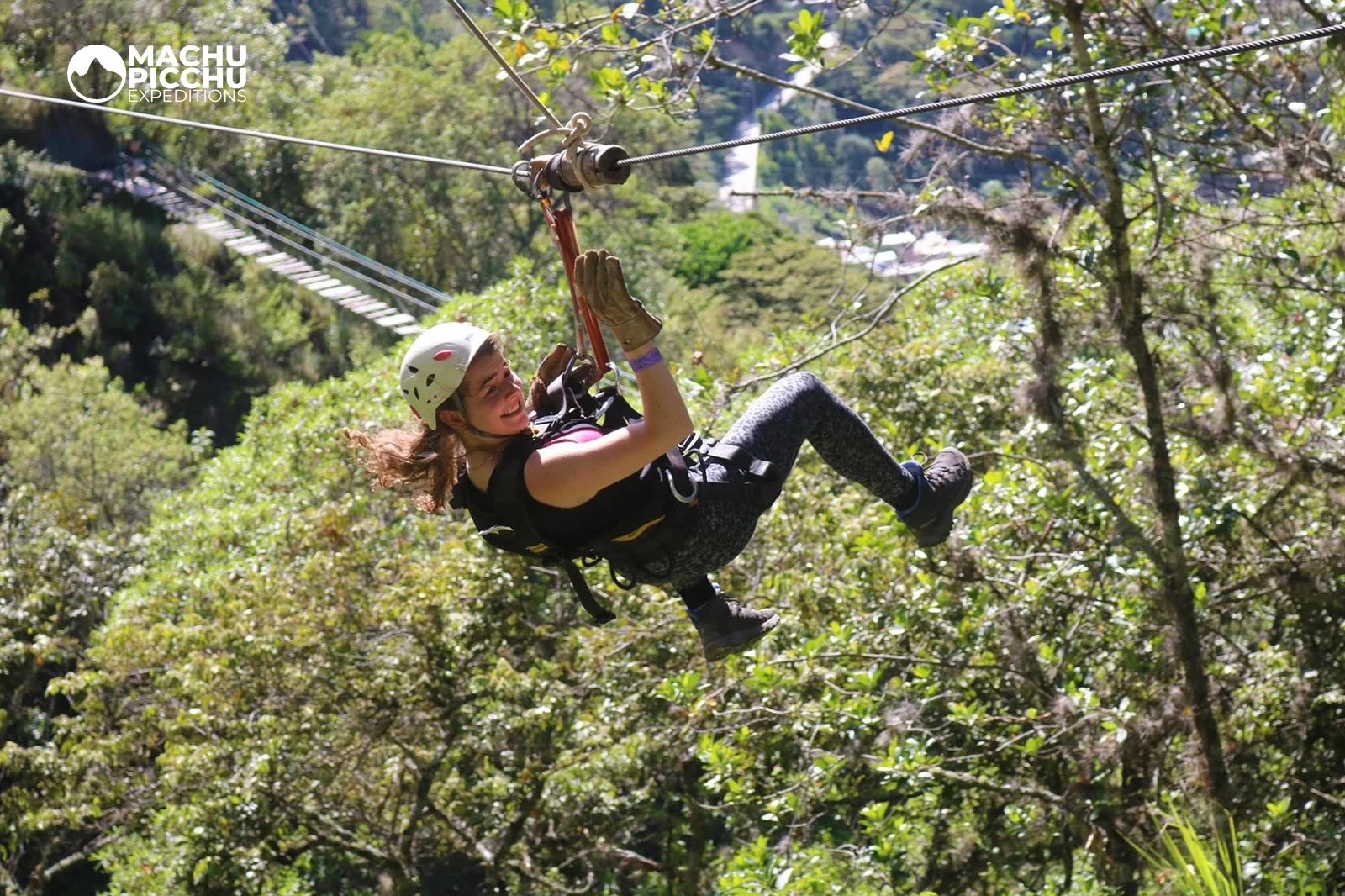
Each cable offers a unique experience, giving you stunning aerial views of the surrounding mountains and the Salkantay River
Longest Cable: 1 kilometer (0.62 miles) — perfect for a high-speed thrill
Shortest Cable: 750 meters (0.43 miles) — a quick but equally exciting ride
Other Cables: Measure between 800 and 900 meters (0.5–0.56 miles), offering a mix of speeds and views
Tibetan Bridge:
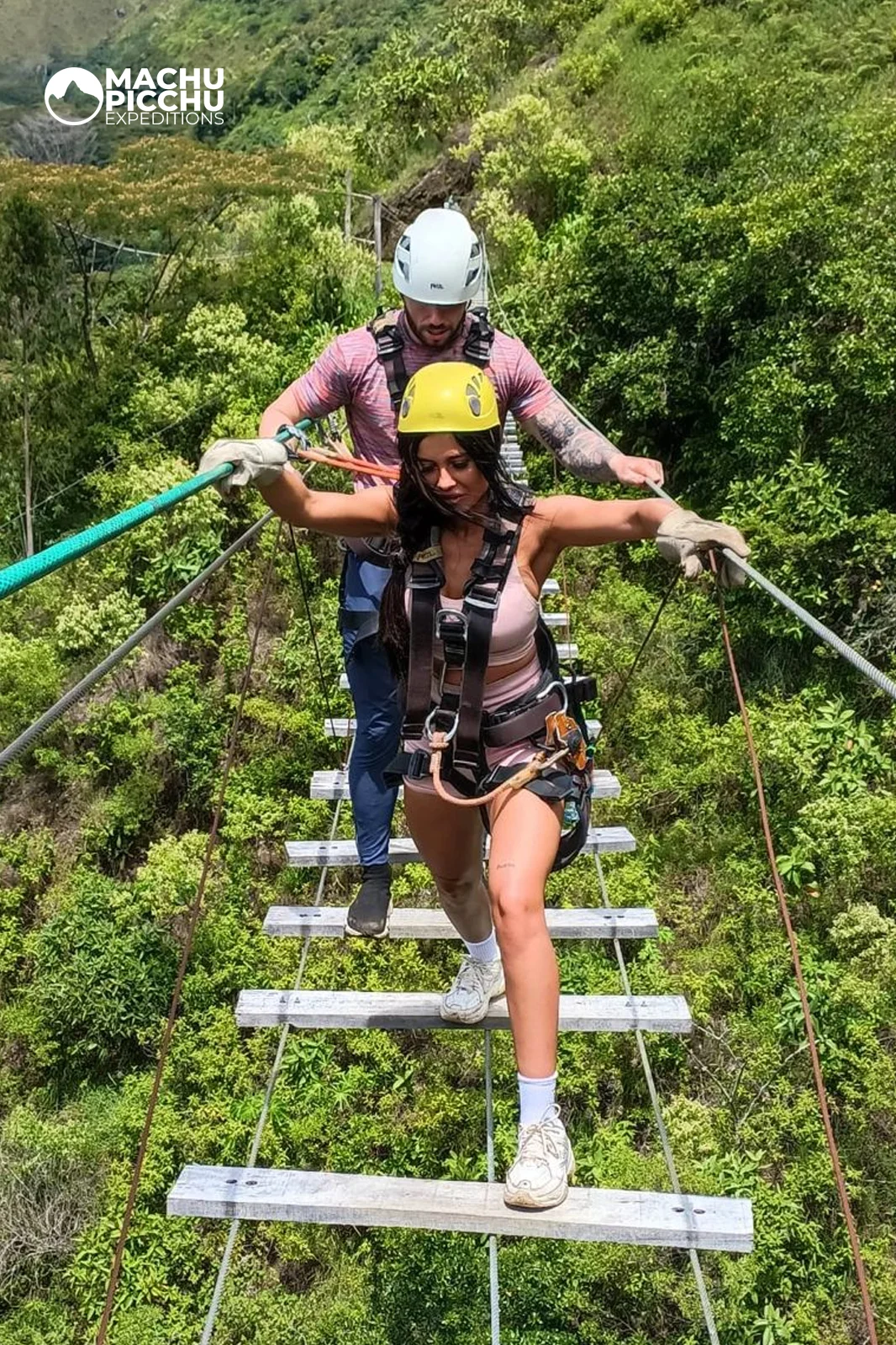
A 300-meter (0.18 miles) long bridge suspended high above the river, between 400 and 500 meters (1,312–1,640 feet) in altitude.
Crossing the bridge is an exhilarating experience, perfect for those seeking an extra adrenaline boost.
This combination of ziplines and the Tibetan bridge makes the Salkantay Zipline a must-try activity, offering a unique perspective of the Andes and an unforgettable adventure. Whether you’re a thrill-seeker or simply looking for a memorable highlight during your trek, this experience won’t disappoint!
Safety and Equipment
The facilities are fully certified and meet all the requirements set by local authorities. The zipline company holds all necessary permits to ensure compliance and safety.
High-tech equipment imported from France, featuring renowned brands like Petzl, guarantees a secure and reliable experience.
A professional team of guides provides full assistance throughout the activity, ensuring both safety and enjoyment. You don’t need to handle the zipline yourself—just relax and focus on having an amazing adventure.
Why you should book the Salkatany Zipline Adventure?
Immerse yourself in a one-of-a-kind adventure surrounded by lush coffee plantations and the awe-inspiring landscapes of the Andes. This activity offers more than just adrenaline—it’s an unforgettable way to connect with nature and create lasting memories.
Capture the highlights of your experience with photos and videos, perfect for reliving the excitement or sharing with friends and family.
Don’t miss out! This is your chance to add a thrilling burst of adrenaline to your journey to Machu Picchu. Book your spot today and ensure you don’t miss this incredible experience. Spaces fill up quickly, so reserve in advance and get ready for the adventure of a lifetime!
Introductory training
Safety chat
Safety equipment including helmets, harnesses and gloves
4 exhilarating ziplines
1 tibetan bridge
Bilingual and certified tour guides
The Salkantay Zipline is in Santa Teresa Valley, a beautiful district of Cusco in the Peruvian Andes. It’s 40 minutes far away by transport from the third campsite for Salkantay trekkers, situated right above the stunning Salkantay River.
Specifically designed for adventurers on the Salkantay Trek, the zipline is a unique and thrilling experience available on the third day of the hike. Trekkers usually arrive in Lucmabamba between 11:00 AM and 12:00 PM, using it as a lunch or camping spot.
This impressive activity can be enjoyed either before or after lunch, as the afternoons are typically free to rest. The zipline makes the most of this time, offering an extra dose of adrenaline and fun that perfectly complements the trek experience to Machu Picchu.
What To Expect
Total Duration: The entire activity takes about 1.5 hours to complete, making it an ideal addition to your day without taking up too much time
Main Features (4 Zipline Cables):
Each cable offers a unique experience, giving you stunning aerial views of the surrounding mountains and the Salkantay River
Longest Cable: 1 kilometer (0.62 miles) — perfect for a high-speed thrill
Shortest Cable: 750 meters (0.43 miles) — a quick but equally exciting ride
Other Cables: Measure between 800 and 900 meters (0.5–0.56 miles), offering a mix of speeds and views
Tibetan Bridge:
A 300-meter (0.18 miles) long bridge suspended high above the river, between 400 and 500 meters (1,312–1,640 feet) in altitude.
Crossing the bridge is an exhilarating experience, perfect for those seeking an extra adrenaline boost.
This combination of ziplines and the Tibetan bridge makes the Salkantay Zipline a must-try activity, offering a unique perspective of the Andes and an unforgettable adventure. Whether you’re a thrill-seeker or simply looking for a memorable highlight during your trek, this experience won’t disappoint!
Safety and Equipment
The facilities are fully certified and meet all the requirements set by local authorities. The zipline company holds all necessary permits to ensure compliance and safety.
High-tech equipment imported from France, featuring renowned brands like Petzl, guarantees a secure and reliable experience.
A professional team of guides provides full assistance throughout the activity, ensuring both safety and enjoyment. You don’t need to handle the zipline yourself—just relax and focus on having an amazing adventure.
Why you should book the Salkatany Zipline Adventure?
Immerse yourself in a one-of-a-kind adventure surrounded by lush coffee plantations and the awe-inspiring landscapes of the Andes. This activity offers more than just adrenaline—it’s an unforgettable way to connect with nature and create lasting memories.
Capture the highlights of your experience with photos and videos, perfect for reliving the excitement or sharing with friends and family.
Don’t miss out! This is your chance to add a thrilling burst of adrenaline to your journey to Machu Picchu. Book your spot today and ensure you don’t miss this incredible experience. Spaces fill up quickly, so reserve in advance and get ready for the adventure of a lifetime!
Introductory training
Safety chat
Safety equipment including helmets, harnesses and gloves
4 exhilarating ziplines
1 tibetan bridge
Bilingual and certified tour guides
The Salkantay Zipline is in Santa Teresa Valley, a beautiful district of Cusco in the Peruvian Andes. It’s 40 minutes far away by transport from the third campsite for Salkantay trekkers, situated right above the stunning Salkantay River.
Specifically designed for adventurers on the Salkantay Trek, the zipline is a unique and thrilling experience available on the third day of the hike. Trekkers usually arrive in Lucmabamba between 11:00 AM and 12:00 PM, using it as a lunch or camping spot.
This impressive activity can be enjoyed either before or after lunch, as the afternoons are typically free to rest. The zipline makes the most of this time, offering an extra dose of adrenaline and fun that perfectly complements the trek experience to Machu Picchu.
What To Expect
Total Duration: The entire activity takes about 1.5 hours to complete, making it an ideal addition to your day without taking up too much time
Main Features (4 Zipline Cables):
Each cable offers a unique experience, giving you stunning aerial views of the surrounding mountains and the Salkantay River
Longest Cable: 1 kilometer (0.62 miles) — perfect for a high-speed thrill
Shortest Cable: 750 meters (0.43 miles) — a quick but equally exciting ride
Other Cables: Measure between 800 and 900 meters (0.5–0.56 miles), offering a mix of speeds and views
Tibetan Bridge:
A 300-meter (0.18 miles) long bridge suspended high above the river, between 400 and 500 meters (1,312–1,640 feet) in altitude.
Crossing the bridge is an exhilarating experience, perfect for those seeking an extra adrenaline boost.
This combination of ziplines and the Tibetan bridge makes the Salkantay Zipline a must-try activity, offering a unique perspective of the Andes and an unforgettable adventure. Whether you’re a thrill-seeker or simply looking for a memorable highlight during your trek, this experience won’t disappoint!
Safety and Equipment
The facilities are fully certified and meet all the requirements set by local authorities. The zipline company holds all necessary permits to ensure compliance and safety.
High-tech equipment imported from France, featuring renowned brands like Petzl, guarantees a secure and reliable experience.
A professional team of guides provides full assistance throughout the activity, ensuring both safety and enjoyment. You don’t need to handle the zipline yourself—just relax and focus on having an amazing adventure.
Why you should book the Salkatany Zipline Adventure?
Immerse yourself in a one-of-a-kind adventure surrounded by lush coffee plantations and the awe-inspiring landscapes of the Andes. This activity offers more than just adrenaline—it’s an unforgettable way to connect with nature and create lasting memories.
Capture the highlights of your experience with photos and videos, perfect for reliving the excitement or sharing with friends and family.
Don’t miss out! This is your chance to add a thrilling burst of adrenaline to your journey to Machu Picchu. Book your spot today and ensure you don’t miss this incredible experience. Spaces fill up quickly, so reserve in advance and get ready for the adventure of a lifetime!
Introductory training
Safety chat
Safety equipment including helmets, harnesses and gloves